
Your traffic looks healthy. People are landing on the homepage, browsing service pages, spending time reading. And yet the phone isn’t ringing.
If that sounds familiar, you’re not alone – and the problem is almost never what you think it is.
Most businesses focus on getting more traffic, while the bigger opportunity sits in the traffic they already have. If 97 percent of visitors leave without enquiring, the issue is rarely a lack of demand. It is friction, trust gaps, weak messaging or a website that fails to guide action.
Here’s what’s actually going wrong, and how to fix it.
The Real Reason Visitors Don’t Convert
There’s a common assumption that if someone leaves your website without getting in touch, they weren’t interested. In most cases, that’s wrong.
Visitors don’t leave randomly. The issue is often misunderstood. It’s easy to assume the problem lies in the quality of traffic or the design of the website. In most cases, the real issue is deeper.
The most common culprits are friction, trust and clarity. Remove those barriers and the same traffic starts converting.
1. Your Site Takes Too Long to Load
40 percent of visitors abandon a website if it takes more than three seconds to load. A one-second delay in page load time can lead to a 7 percent drop in conversions.
When a page goes from a one-second load to three seconds, bounce probability jumps by 32 percent. At five seconds it nearly doubles.
”Speed isn’t a technical detail, it’s a first impression. A slow site signals an unreliable business before a single word is read.”
Fix it: Run your site through Google PageSpeed Insights. Focus on your Core Web Vitals – particularly LCP (how fast your main content loads) and INP (how quickly the page responds when someone interacts with it).
2. Your First Impression Fails the Three-Second Test
It takes just 0.05 seconds for a visitor to form an opinion about your website. 94 percent of users base their initial opinion of a business on its design.
If your homepage doesn’t immediately communicate what you do, who it’s for and why it matters – visitors leave. Not because they’re not interested, but because the work of figuring it out isn’t worth their time.
Fix it: Test your homepage with someone who has never seen your business before. Ask them what you do and who you serve. If they can’t answer in ten seconds, your messaging needs work.
3. Your Messaging Doesn’t Match What Visitors Came to Find
Traffic arrives with expectations. If what they find on your site doesn’t match what they expected when they clicked – from an ad, a search result or a social post, the results is that they leave immediately.
Poor website copy is one of the key reasons visitors bounce. If the content is badly written, unclear or challenging to follow, visitors quickly lose interest and leave, and if the copy fails to prompt them toward the intended action, they won’t investigate further.
Fix it: Make sure your headlines speak directly to the problem your customers are trying to solve and not to what you want to say about your business.
4. Navigation Makes It Hard to Find What They Need
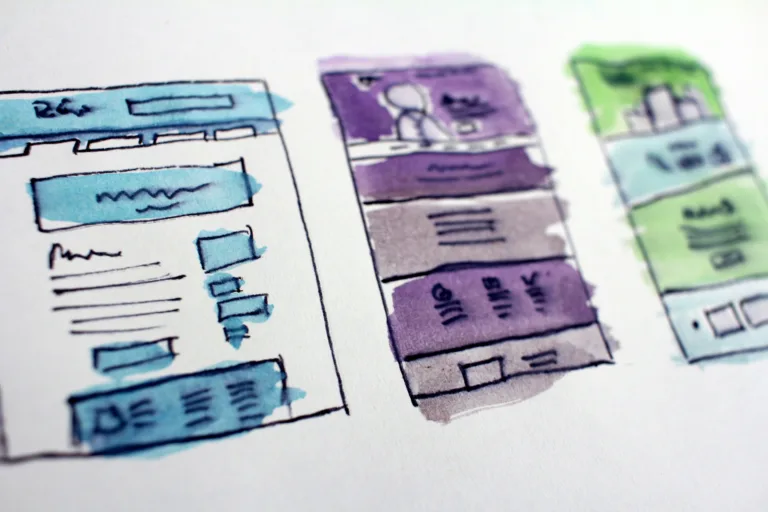
Poor website structure and layout make it hard for users to navigate. If your website is difficult to understand, visitors look around for a bit – but after a few clicks, they give up and move on.
Every extra click between a visitor and what they’re looking for is an opportunity for them to leave. Complicated menus, too many options and pages buried three or four levels deep all create friction that costs you leads.
Fix it: Simplify your navigation. Prioritize the pages your customers care about most and make them reachable within two clicks from the homepage.
5. There’s No Clear Next Step
Even if a visitor is interested, they won’t act if the path forward isn’t obvious. A page that ends without a clear call to action, or worse, one that offers five different calls to action at once, creates hesitation.
Friction is often subtle but has a direct effect on conversions. Every extra step, distraction or moment of uncertainty increases the likelihood that a visitor will exit instead of enquiring.
Fix it: Every page should have one primary call to action. Make it specific, make it easy to find and make it clear what happens when they click it.
6. Your Site Doesn’t Build Trust
Interest doesn’t always lead to action. Many visitors leave because they are not yet convinced they can trust what they see.
Trust is built through signals – customer testimonials, case studies, named team members, logos of clients you’ve worked with and any relevant credentials or certifications. Without them, even a well-designed site can feel anonymous.
Fix it: Add social proof to your most important pages – particularly your homepage and service pages. Real results from real customers do more than any headline you can write about yourself.
7. The Mobile Experience Is Broken
42 percent of visitors will leave a website because of poor functionality. And in 2026, the majority of that traffic arrives on a mobile device. A site that works well on desktop but is frustrating on mobile is losing more than half its potential leads before they even read a word.
Fix it: Open your own website on your phone right now. Test every link, fill out every form and check how long it takes to load. If anything feels slow or awkward, your visitors feel it too.
The Bigger Picture
More traffic is rarely the answer. A website attracting 5,000 visitors a month at a 3 percent conversion rate generates 150 enquiries – but also loses 4,850 visitors without action. Improving conversion by even one percentage point is worth more than doubling your ad spend.
The businesses that grow fastest online aren’t always the ones with the most traffic. They’re the ones that have made it as easy as possible for the right visitors to take the next step.
Want to know why your visitors are leaving? Get in touch and we’ll take a look at what’s holding your site back.